



Medical caster cleaning compatibility should be evaluated for the exact caster and cleaning process. A general description such as “easy to clean” or “corrosion resistant” does not identify which chemicals, concentrations and exposure conditions a model can tolerate. Procurement teams can make this discussion more useful by sharing the actual process and requesting a specific written response.
Describe the cleaning process in enough detail
Ask the equipment owner for the approved cleaning instructions and products. Record the product name, active ingredients where available, dilution, contact time, temperature and frequency of use. Explain whether the equipment is wiped, rinsed or exposed to another process. Do not assume that compatibility with one cleaning product establishes compatibility with a different formulation.
Check the complete caster assembly
A caster includes more than its wheel tread. Ask the supplier to consider the housing, fork, axle, bearings, seals, fasteners and brake parts in its assessment. Request clarification of any limits or exclusions. A statement about one material should not be treated as confirmation for the assembled product.
| Question | Useful supplier response |
|---|---|
| Which configuration was assessed? | Exact model, materials and drawing or specification revision |
| Which cleaning conditions were considered? | Named products, dilution, contact time, temperature and exposure method |
| What evidence supports compatibility? | Applicable test report, documented material data or a clearly qualified assessment |
| What restrictions apply? | Excluded processes, maintenance instructions and conditions requiring further evaluation |
Separate appearance from functional acceptance
Define what will be checked after representative exposure. A purchasing evaluation can record visible material changes as well as the required movement and brake functions. Agree on the procedure and acceptance criteria with the responsible equipment team before testing. Do not select a process solely because it leaves the exterior looking clean.
Clarify maintenance instructions
Request the model’s maintenance guidance and ask whether the proposed cleaning method changes any inspection requirements. Follow the equipment manufacturer’s instructions for inspection, servicing and return to use. Obtain model-specific advice before adding lubricant or changing the cleaning process; a generic maintenance tip may not suit a particular bearing or brake design.
Keep antimicrobial claims separate
If a supplier makes an antimicrobial claim, request the evidence, test method, tested surface and scope of that claim. Do not treat such a feature as proof of cleaning compatibility or as a substitute for the equipment’s approved cleaning process. Avoid extending a component-level statement into an unsupported claim about clinical outcomes.
Turn the answers into a controlled purchasing requirement
Keep the agreed cleaning conditions and supporting documents with the approved caster specification. If the cleaning product, exposure method or caster materials change, refer the change back for assessment. This gives purchasing and equipment teams a common record rather than relying on an informal statement made during a quotation.
When discussing DYU NDS series double wheel casters or central lock casters, send the cleaning product details and equipment requirements with your enquiry. Compatibility and any supporting evidence must be confirmed for the proposed model.
General reference: Blickle product safety guidance identifies cleaning-agent compatibility as a consideration. It is not evidence of testing or approval of DYU products. Prepared with AI assistance; equipment-specific cleaning instructions take precedence.
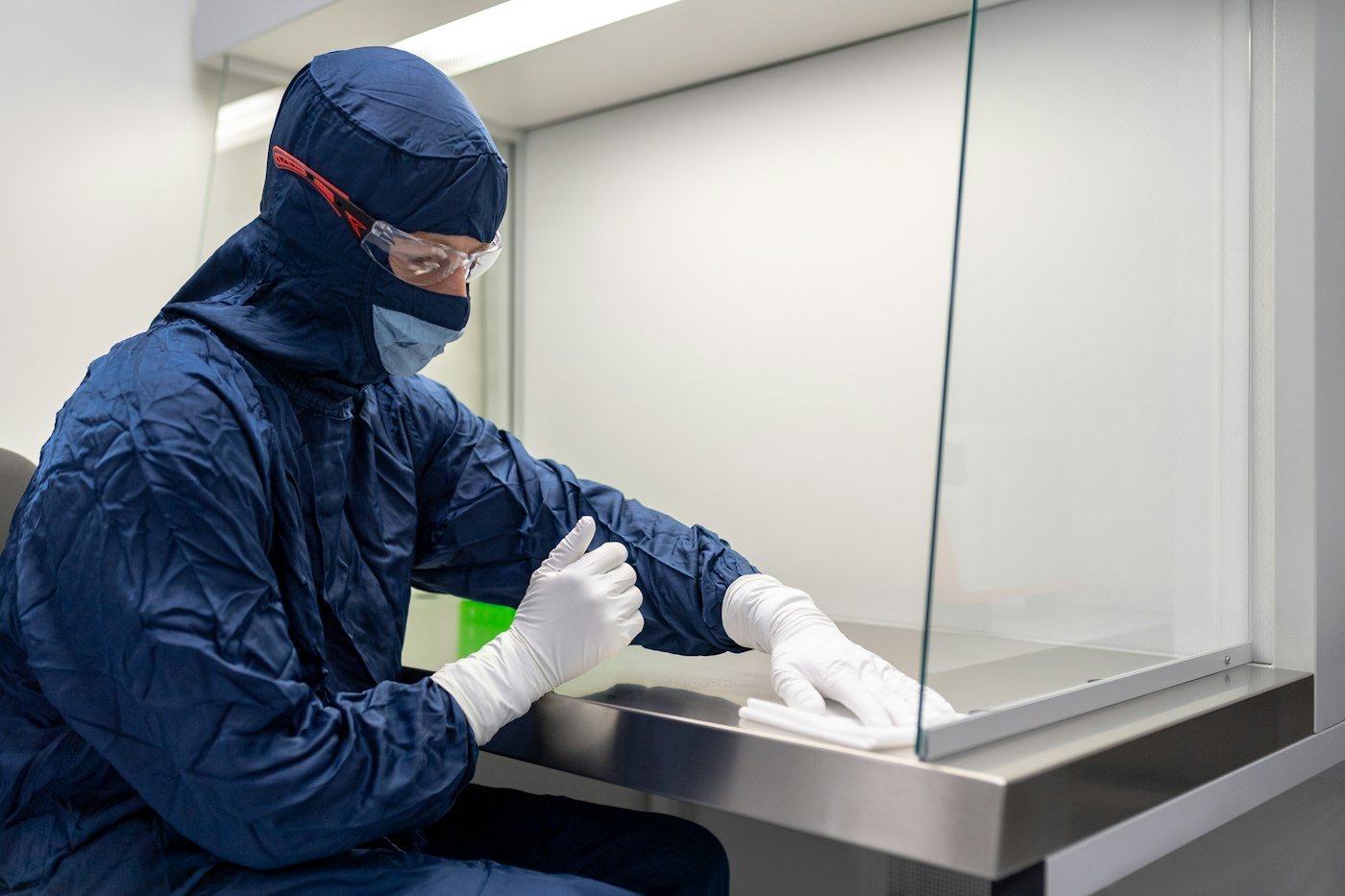
Cover photo: Anton / Unsplash. Illustrative stock photography used under the Unsplash License.