


A trolley feels manageable along a straight corridor, then becomes awkward when it has to turn out of a bay. Another is difficult to get moving but rolls more easily once it is underway. Calling both problems “bad wheels” loses the most useful clue: when the effort changes.
For an equipment buyer, that distinction helps frame a better enquiry. It does not diagnose a fault or replace a workplace handling assessment. If a trolley behaves abnormally, follow the equipment owner’s reporting and out-of-service procedure rather than testing it by pushing harder.
The first push and a steady roll are different
Starting resistance describes the effort needed to begin wheel movement. Rolling resistance concerns keeping it moving. They are related, but a caster that seems acceptable once a trolley is underway may still need attention at the start.
Wheel construction, bearings, load and the floor all belong in this discussion. Changing only the wheel diameter can leave other causes unanswered. Equally, a supplier’s comparison made on a smooth laboratory surface does not describe every hospital route. Blickle’s wheel-series guide explains the distinction and the controlled conditions behind its comparisons. It is general manufacturer guidance, not test evidence for a DYU caster.
Notice the turn before the straight run
A swivel caster also has to align with the direction of travel. In a confined bay, the equipment may need to change direction before there is room for a long straight movement. Describe that manoeuvre to the supplier instead of reporting only how the trolley travels down the corridor.
The number, type and arrangement of the casters matter to manoeuvrability, as Blickle’s selection guide explains. A proposed configuration needs to be considered as part of the complete equipment. Do not convert swivel positions, alter a linkage or change a lock function on the assumption that this will make steering easier.
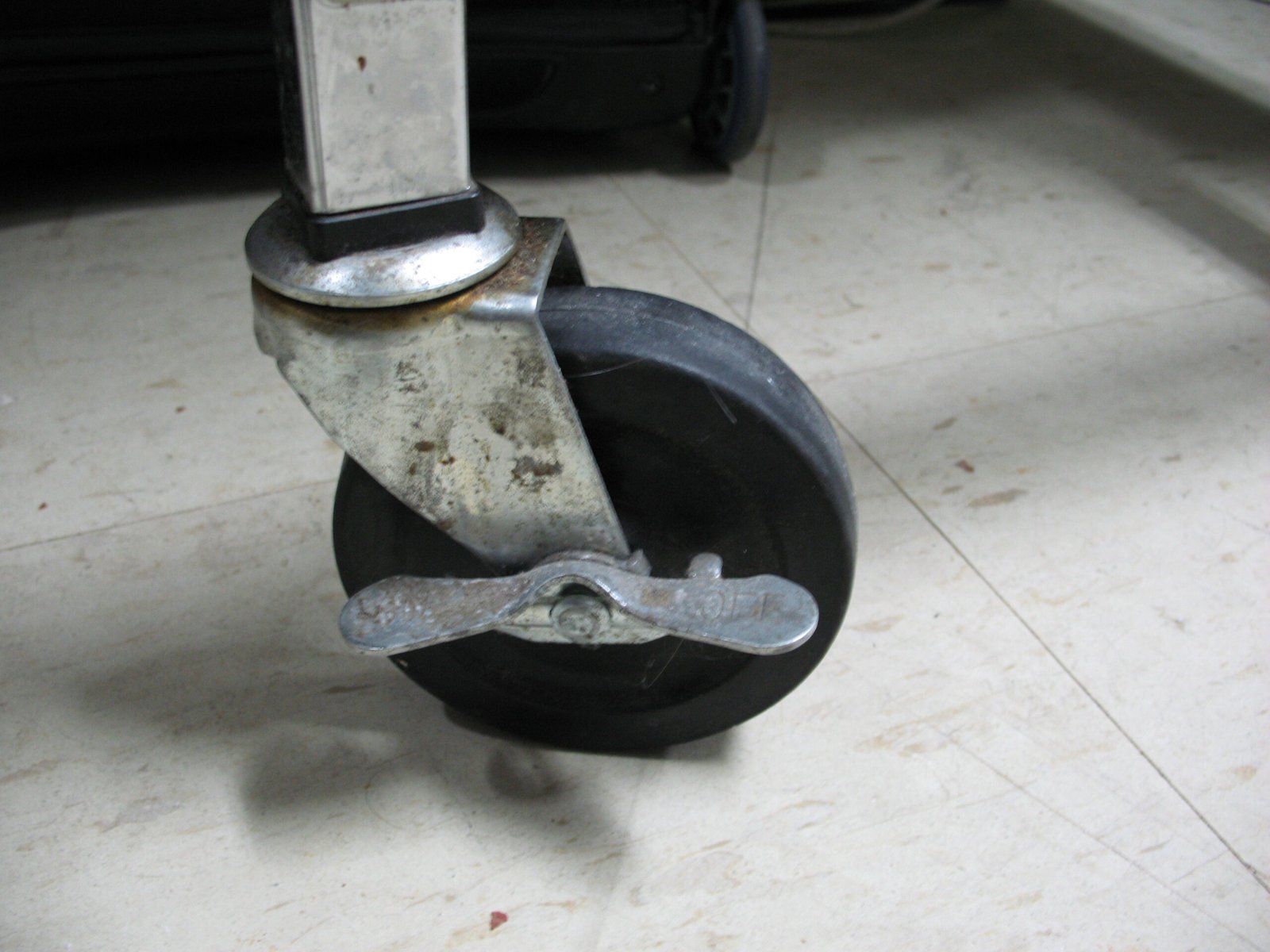
The photograph separates two visible features: the swivel head above the wheel and the pedal near the tread. A pedal’s appearance alone does not tell you which movements it locks on another caster. Identify the fitted assembly and use its instructions when describing an operating problem.
Include the awkward part of the route
A smooth stretch of floor may be the least informative place to compare candidate casters. Tell the equipment team about doorways, floor joints, thresholds and tight turns on the intended route. Include the loaded configuration and the way the equipment is normally moved. A phone photograph of the route can explain a joint or clearance problem more clearly than “normal hospital flooring.”
Where an assessment is needed, the responsible team should define the method, representative conditions and acceptance criteria. Do not run informal loaded trials around patients or use a blog post to choose a safe pushing-force limit. The useful result is a comparison under an agreed procedure, not a claim that a wheel “feels lighter” without saying where or under what load.
Ask for an option that addresses the observed problem
For example, a fictional enquiry might say: “The highest effort occurs when turning out of the storage bay; straight travel on the main corridor is less of a concern. Attached are the route photographs, current caster reference, mounting drawing and loaded equipment details. Which configuration would you propose for technical review, and what comparison information can you provide?”
That gives a supplier more to work with than “send your easiest-running wheel.” Browse the DYU DS-series double-wheel caster range to discuss available configurations, then send the application and route details. If a replacement is proposed, compare its mounting, height and clearance before it enters the equipment’s approval process.
Cover: hospital beds and a corridor floor, illustrating the operating route rather than a DYU installation. Photo: adrian vieriu / Pexels, used under the Pexels License.
Editorial note: AI-assisted educational content; examples are illustrative. Use the equipment’s approved instructions and assessment process.